Bedding · Materials · Sleep
How to Choose a Wool Comforter for Year-Round Sleep
A comforter is asked to perform a modest miracle: keep you warm without making you feel wrapped in a weather system. Wool can be a thoughtful answer, provided you choose its weight, construction, and care requirements with your room—and your own habits—in mind.
The bedding decision often begins at the wrong end of the bed. We look at color, stitching, perhaps the vague promise of “all-season comfort,” before asking a more useful question: what does a night actually feel like in this room? Is the window drafty? Does the heating come on after midnight? Do you sleep warm, cold, or in a state of negotiation with the person beside you? A wool comforter may suit a wide range of sleepers, but no fiber can overrule the climate of a bedroom or the peculiarities of a body.
Wool is valued for a combination of warmth, loft, and moisture management. Its fill can provide insulation without the dense, pressed-down feeling some people associate with heavier bedding. But “wool comforter” describes a family of constructions, not a single experience. Fill weight, quilting, shell fabric, and dimensions all influence how the comforter drapes and performs. Choosing well means considering the whole object, then considering how it will live with the sheets and blankets already in your home.
Start with the room, not the label
A year-round comforter is not necessarily one that feels identical in every season. Rather, it is a layer that can remain useful as conditions change. In a well-insulated home with steady temperatures, a medium-weight comforter may provide enough warmth through much of the year. In an older house with chilly nights, or a bedroom that becomes warm and close in summer, a single fixed layer may be less versatile than a lighter comforter used alongside removable blankets.
Before comparing products, observe the bedroom over several nights. Take note of the temperature at bedtime and again before morning, if you can do so comfortably. Pay attention to drafts, heating schedules, direct sun, and whether the room holds heat after the rest of the house cools. The same comforter can feel inviting in a cool room and excessive in a warm one. “All-season” is therefore best understood as a claim about flexibility, not a guarantee that one item will suit every climate, sleeper, and month.
Your own sleeping pattern matters just as much. Some people wake warm even when the room feels cool; others are almost always searching for another layer. A partner’s preferences may be different. If two sleepers have noticeably different temperature needs, separate blankets or a lighter shared comforter with individual throws can be more practical than trying to find a single perfect middle ground. The bed need not resolve a domestic disagreement. It can simply give each sleeper options.
Understand fill weight and warmth
Fill weight refers to the amount of insulating material in a comforter, while total weight also includes its shell and construction. These figures can help when comparing similar products, but they are not a universal warmth scale. Differences in wool type, fill distribution, loft, quilting, and shell fabric can make two comforters with similar numbers feel unlike one another. If a maker provides a warmth rating, treat it as a useful point of comparison rather than a scientific verdict on your bedroom.
A lighter wool comforter may suit warm sleepers, mild climates, or people who prefer to layer. A medium-weight option can be a reasonable starting point for a room with moderate seasonal variation. A heavier version may be more comfortable in a cold bedroom or for someone who consistently feels chilled at night. The purpose is not to acquire the warmest available layer; it is to find one that allows a stable, comfortable sleep without frequent adjustments.
The word “weight” can be misleading in another way. A substantial comforter may feel reassuring to one person and cumbersome to another. Warmth and physical heaviness are not the same quality, though they can be related. If you are sensitive to pressure or dislike a bed that feels crowded, look for clear specifications and consider how the fill is distributed. When possible, examine a comforter in person or check the return policy before making a decision. Product descriptions are useful; they are not a substitute for the sensation of being underneath the thing.
What wool can—and cannot—do
Wool fibers have a naturally crimped structure, which helps create pockets of air within the fill. Air held in those spaces contributes to insulation, while the fiber’s ability to interact with moisture can support a less clammy feel than some sleepers experience with poorly suited bedding. These properties help explain wool’s appeal as a material for comforters, particularly for people who want warmth without an especially dense layer.
That does not mean wool automatically regulates every sleeper’s temperature, prevents overheating, or makes a bedroom comfortable in every season. Room temperature, pajamas, mattress construction, humidity, the comforter shell, and the number of other layers all have a role. People also vary in their response to the same conditions. A wool comforter is one part of a sleep environment, not a climate-control system disguised as bedding.
Sensitivity is worth considering. Wool fill is generally enclosed by a fabric shell, so it does not necessarily touch the skin directly; nevertheless, people with wool sensitivities or allergies should check the materials and construction carefully and consult a qualified health professional when needed. Anyone particularly sensitive to texture may also want to inspect the shell fabric, seams, and finish. A comforting material in theory should feel comfortable in practice.
Construction changes the experience
A comforter’s fill is only part of its behavior. The shell—often cotton or another closely woven fabric—contains the wool and contributes to the feel, breathability, durability, and overall drape. A crisp, tightly woven shell may feel more structured; a softer one may move more easily over the body. Check the fiber content of the shell rather than assuming that a product described as wool is made entirely from wool.
Quilting and stitching help keep fill distributed across the comforter. If the design uses sewn-through channels or boxes, those stitched areas can create a more organized appearance and reduce the chance of fill shifting substantially. Construction details vary, and no one pattern is automatically best. What matters is whether the maker explains how the fill is secured and whether the stitching appears suited to regular use.
Consider the dimensions, too. A comforter that barely covers the mattress can leave shoulders or feet exposed when the bed is shared. One that is dramatically oversized may be awkward to wash, dry, or store. Compare the stated measurements with your mattress, including its depth, and account for any topper. If you use a duvet cover, make sure the comforter and cover are compatible in size. Small discrepancies can lead to bunching at one end, a problem capable of occupying an unreasonable amount of attention at two in the morning.
Build a flexible bedding arrangement
A comforter does not have to work alone. A breathable sheet beneath it can change the feel of the bed, while a lightweight blanket can offer an adjustable layer for cold spells. This approach is often more adaptable than buying one very heavy comforter and expecting it to answer every seasonal question. If spring and autumn are variable where you live, the ability to add or remove a layer may be more valuable than a grand promise of year-round performance.
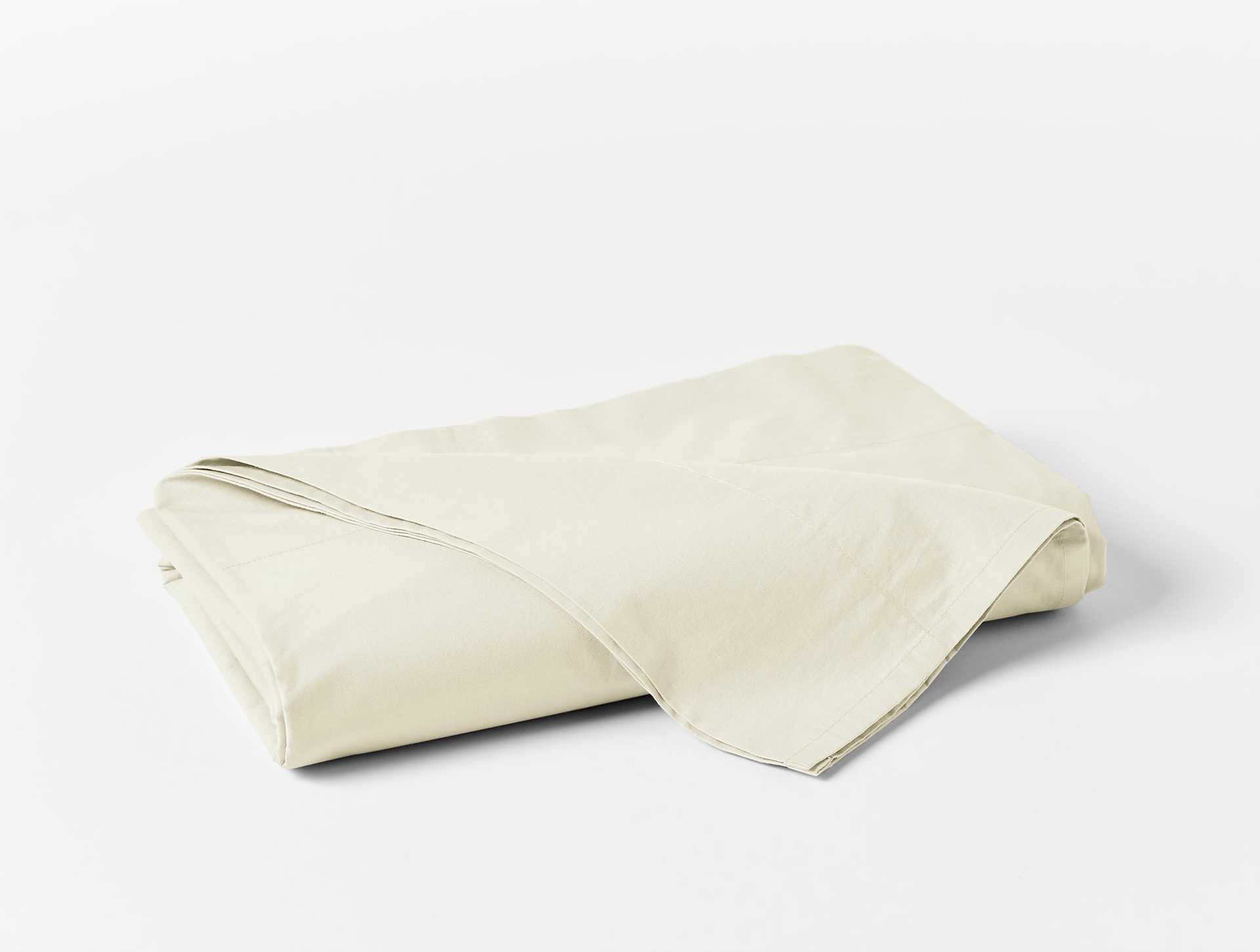
Sheet choice can influence the first impression of the bed. Linen has a relaxed texture and an airy feel that many sleepers appreciate, while cotton percale is often chosen for its crisp, cool hand. For readers comparing those surfaces, the Layla Linen Sheet Set is made from stone-washed flax linen and designed for breathable, year-round use. Another option is a Refined Organic Percale Flat Sheet, made from organic cotton with a light, breathable feel. These examples concern the sheet layer, not wool comforters; they illustrate how different materials can shape the overall sleeping surface.
Pillowcases, too, contribute to the bed’s tactile character. Linen pillowcases, for instance, feel different from a smooth cotton weave and may soften with use. A set such as Organic Relaxed Linen Pillowcases can be considered as part of a coordinated bedding arrangement, though the right choice is ultimately the one that feels pleasant against your face and is manageable to launder. There is no requirement that every layer share the same fiber. A bed can be a practical coalition.
Care is part of the buying decision
Before choosing a wool comforter, read its care instructions in full. Wool-filled bedding may have specific requirements, and some comforters are not intended for routine machine washing. Depending on the product, the manufacturer may recommend professional cleaning, spot cleaning, airing, or a particular kind of wash. Never assume that a comforter can be treated like a cotton sheet simply because both are bedding.
This practical question is easy to postpone until the comforter is already on the bed. Better to ask it early. Is the recommended cleaning method accessible where you live? Can the comforter fit in your washing machine, if machine washing is permitted? Is the shell likely to require special handling? How will you dry it fully and safely? A large textile that cannot be cared for conveniently may become an expensive object you hesitate to use.
Routine airing and prompt attention to spills can reduce the need for frequent intensive cleaning, but follow the maker’s directions. Use a removable duvet cover if the comforter’s construction allows one; a cover can protect the shell from everyday contact and is generally easier to wash. Keep the comforter completely dry before storing it, and choose a clean, breathable storage space rather than compressing it for long periods in a damp or overheated area. Care is not glamorous, but it is one of the ways a textile earns its place in a home.
A few useful questions to ask
A careful comparison does not require an advanced knowledge of textile engineering. It does require a few direct questions, answered in plain language by the product details or the manufacturer:
- What is the exact fiber content of the fill and the shell?
- Is the comforter described as light, medium, or heavy, and what specifications support that description?
- How is the fill distributed and secured?
- What are the finished dimensions, and will they suit the mattress and any duvet cover?
- What cleaning method is recommended, and can you follow it easily?
- Are there certifications or sourcing details you care about, and are they clearly identified?
- Can the comforter be returned if its weight or feel is not right for your home?
Certifications and sourcing claims deserve the same attention as construction. If a product refers to a standard, check what that standard covers rather than assuming it answers every question about environmental impact, animal welfare, or manufacturing. A concise, specific description is more useful than a cluster of reassuring adjectives. Look for information about fiber origin, processing, and the finished product, and distinguish documented claims from general language.
Common selection mistakes
One frequent mistake is choosing by season alone. A comforter marketed for winter may be too warm for a well-heated room; a lightweight one may be perfectly adequate in a chilly home when paired with a blanket. Another is assuming that natural fibers are inherently superior for every sleeper. Materials have distinct characteristics, but personal comfort is not a contest in which one fiber wins for everyone.
It is also easy to confuse softness with quality. A plush hand may be appealing, but it cannot tell you whether the comforter is the right warmth, whether its fill will remain evenly distributed, or whether its care instructions fit your routine. Similarly, a high price does not guarantee a better night. Evaluate material, construction, dimensions, care, and return terms together. The useful comforter is not the one with the most impressive description; it is the one that works in your bedroom without asking to be managed constantly.
Finally, avoid trying to solve an entire sleep problem with a single purchase. If the bedroom is too warm, the heating is inconsistent, or the mattress retains heat, changing the comforter may help only partially. The broader environment matters. Adjusting the room, changing the number of layers, or using different bedding on different nights may make a greater difference than moving from one lofty product description to another.
Finding a year-round balance
A wool comforter can be a compelling choice for someone who wants a warm layer that does not feel excessively bulky, appreciates the character of natural fibers, and is comfortable following the care instructions. It may be less suitable for someone who needs a fully washable comforter, dislikes the feel or sourcing of wool, sleeps very warm, or lives in a climate where one fixed layer is rarely enough. Those are not objections to be argued away. They are useful criteria.
The best starting point is your own record of sleep: the room’s usual temperature, the layers you reach for, and the moments when you wake too hot or too cold. From there, compare fill weight and construction, confirm dimensions, read the shell and care details, and think about how sheets and blankets will work with the new layer. If the comforter is meant to serve throughout the year, prioritize flexibility over a claim of universal suitability.
A well-chosen comforter should make the bed feel less like a problem to solve. It need not be perfect in every imaginable condition. It should be comfortable on ordinary nights, adaptable when the weather shifts, and straightforward enough to care for that you continue to use it. In the end, year-round sleep is less a matter of finding a mythical all-season object than of composing a few good layers—and learning which one to add when the night changes its mind.